
What This Exam Covers
The Humanities CLEP covers a wide range of topics on literature, visual arts, drama and music. It is the equivalent to a full year of introductory college humanities. The exam is about getting exposure to each of these areas and recognizing some of the key works, periods and concepts. You won't need to know everything in each area but it is still a lot to cover. The good news is you are often rewarded 6 semester hour credits instead of 3.
Exam at a Glance
| Questions | 140 multiple choice |
| Time | 90 minutes |
| Passing score | 50 (most schools) |
| College credits | 6 semester hours (typical) |
| Exam fee | $97 |
What's on the Humanities CLEP*?
Two main sections weighted roughly 50/50:
| Category | Weight | Topics |
|---|---|---|
| Literature | ~50% | Drama, poetry, fiction, nonfiction, and philosophy. Ancient Greece through the modern era, including major authors, works, movements, and literary terms. |
| Fine Arts | ~50% | Visual arts (painting, sculpture, architecture), music (composers, genres, periods, musical forms), and film and dance. Styles, periods, and recognition of major works. |
Source: For a full breakdown of what is on the exam, see the College Board Humanities CLEP page.
How hard is the Humanities CLEP*?
This exam is one of the harder ones, especially for those with no prior knowledge in the fields. However, if you've read some classical literature or studied art it can be pretty easy to fill in the parts you don't know. Those starting from scratch will likely need over a month of studying. The exam is also one of the longest, with 140 questions.
Many students concentrate only on the literature side of things but remember that half of the exam is fine arts such as music and visual arts.
How to study for the Humanities CLEP*
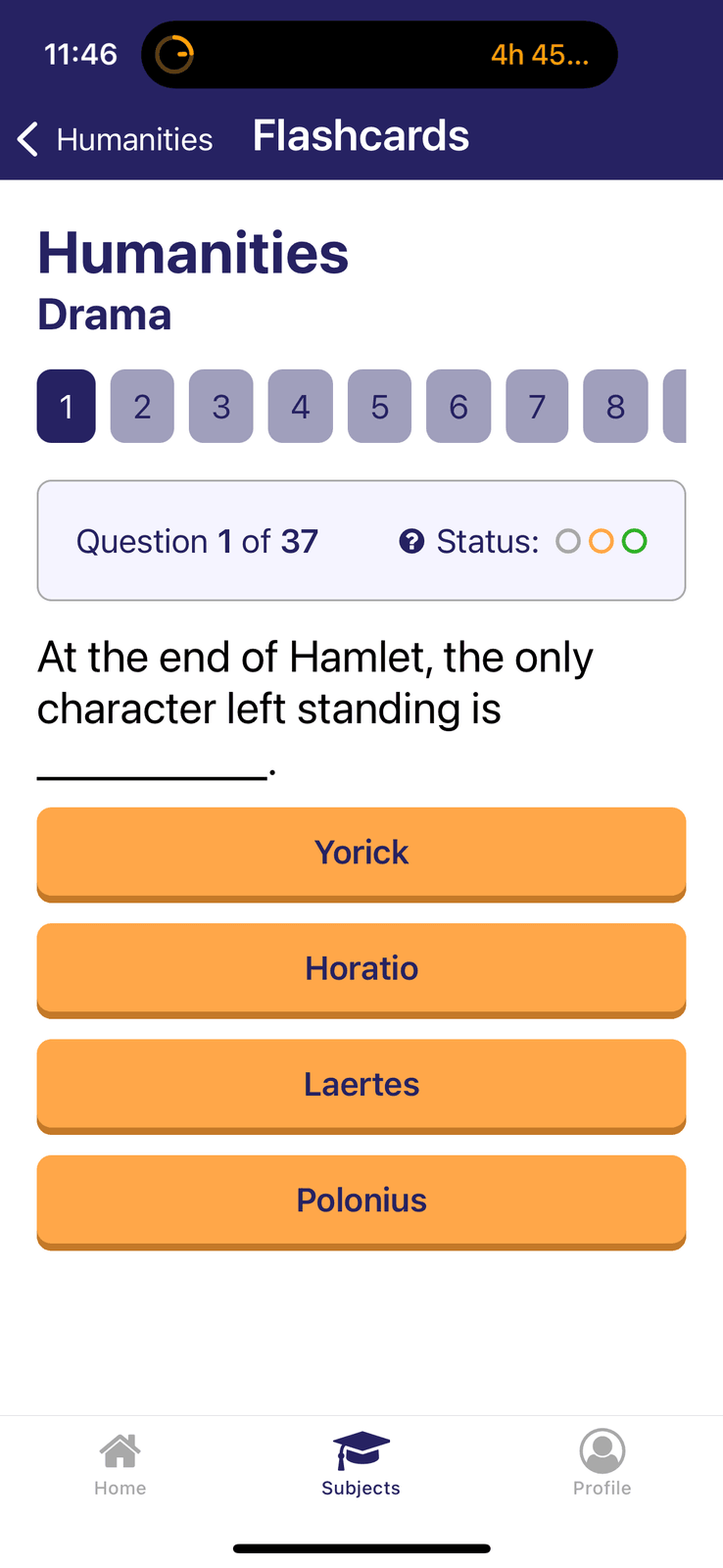
First, quickly review the InstantCert flashcards to identify areas of strength and weakness. Perhaps you know music but need more work in drama. This will help you not waste time studying areas you already know.
You can check out the College Board's free Humanities CLEP practice questions to see some free practice questions.
Modern States has a free course directly related to this exam. It is 5+ hours so be prepared to take your time.
The music section often surprises students. You should learn the major composers by period (Baroque, Classical, Romantic), a few key works by each, and basic musical terminology (sonata, symphony, opera, fugue). You also should know some basics such as what different notes are.
What score do you need to pass?
The standard passing threshold is 50, equivalent to a B or better in a year-long intro humanities course. Sometimes schools have a higher cutoff of 60 or even more so check with your institution.
Can you pass Humanities CLEP* with just flashcards?
Yes, many students do, and our 93% pass rate holds up across this very broad content area. With that being said, visual arts is the one area where supplementing pays off. Add a few hours of Khan Academy Art History or a music class and it can get you far. Google Arts and Culture is another free tool worth browsing for canonical works by period. Students who cover all three areas thoroughly with flashcards and supplement areas of trouble usually pass.
Which colleges accept the Humanities CLEP*?
Most accredited colleges and universities in the United States accept the Humanities CLEP for credit. Be aware that some schools only accept a certain amount of CLEP and/or DSST credits, and highly selective universities like Harvard do not accept CLEP credit at all.
Use the College Board's CLEP credit-granting policy search tool to check your school's policy. Be aware that the tool may not always be up to date, so check with your college.
Humanities CLEP* vs. taking the class
The Humanities CLEP is equivalent to a full year of introductory college humanities (two semesters). At $97 for the exam, it is dramatically cheaper than tuition for those courses at most schools. If you are active military you also get 1 free try at the exam.
Taking this CLEP is the best option if you've had some exposure to the arts and don't plan on continuing within the arts. If you want to pursue higher-level classes, taking a course may be worthwhile to discuss related works with other students and a professor.
Happy testing!