
What This Exam Covers
The Management Information Systems DSST / DANTES exam covers how technology supports business operations and decision-making. This exam covers all things computer from a high-level perspective. It tests high-level computer knowledge, focusing on terminology rather than programming. Knowing what HTML is, not how to program in it, is what is required.
Exam at a Glance
| Questions | 100 multiple choice |
| Time | 120 minutes |
| Passing score | 400 (scaled score) |
| College credits | 3 semester hours (typical) |
| Exam fee | $100 (military free) |
What's on the Management Information Systems DSST / DANTES*?
| Category | Weight | Topics |
|---|---|---|
| Computer Hardware | 10% | History and trends, system components (CPU, RAM, ROM), hardware devices (I/O peripherals), classification (computer, tablet, mobile, wearable technology) |
| Computer Software | 10% | History of computer software, programming and coding (HTML, Java), types of software (operating systems, applications, utilities) |
| Telecommunications and Networks | 10% | Network terminology, strategic importance (LAN/WAN), components (internet, intranet, Cloud, wireless, VPN), information systems security, topology and protocols |
| Business Information Systems | 10% | Electronic commerce (digital marketing, e-business, B2B, B2C), types of information systems (TPS, MIS, DSS, expert systems, AI, ERP, CRM) |
| Systems Analysis and Design | 10% | Characteristics of a system, systems architecture, systems development life cycle (SDLC) |
| Managing Data Resources | 12% | Data models (entity relationships, types, attributes), database management systems, data query and update |
| Business Decision Making | 14% | Knowledge management, data warehousing (Big Data), data mining (data analytics, business intelligence) |
| Project Management | 10% | Approaches (Waterfall, Predictive, Agile, KANBAN/SCRUM), tools (GANTT, PERT, SAFe), terminology (critical path, Six Sigma, work breakdown structure, triple constraint) |
| MIS and the Enterprise | 14% | MIS hierarchy (levels and functions), MIS role in the enterprise, competitive advantage through MIS, security and ethical/legal/privacy issues |
Source: For a full breakdown of what is on the exam, see the DSST / DANTES Management Information Systems exam page.
How hard is the Management Information Systems DSST / DANTES*?
This one can be difficult if you don't have any computer knowledge. However, if you have a working knowledge of hardware, software, and some general computer networking knowledge, it can be fairly easy. Business Decision Making as well as MIS and the Enterprise are the two biggest sections and both test concepts rather than technical skills. You need to know how data warehousing, data mining, and knowledge management relate to each other. The hardware and networking sections use technical vocabulary but you won't need to know the fine details. Those with any IT or business technology experience will recognize a lot of the content. Starting from scratch, plan for 4 to 5 weeks.
One section catches a lot of students off guard: Project Management (10%). It covers Agile, SCRUM, GANTT charts, critical path analysis, and Six Sigma. These concepts are more about how you manage a software team and are often overlooked.
How to study for the Management Information Systems DSST / DANTES*
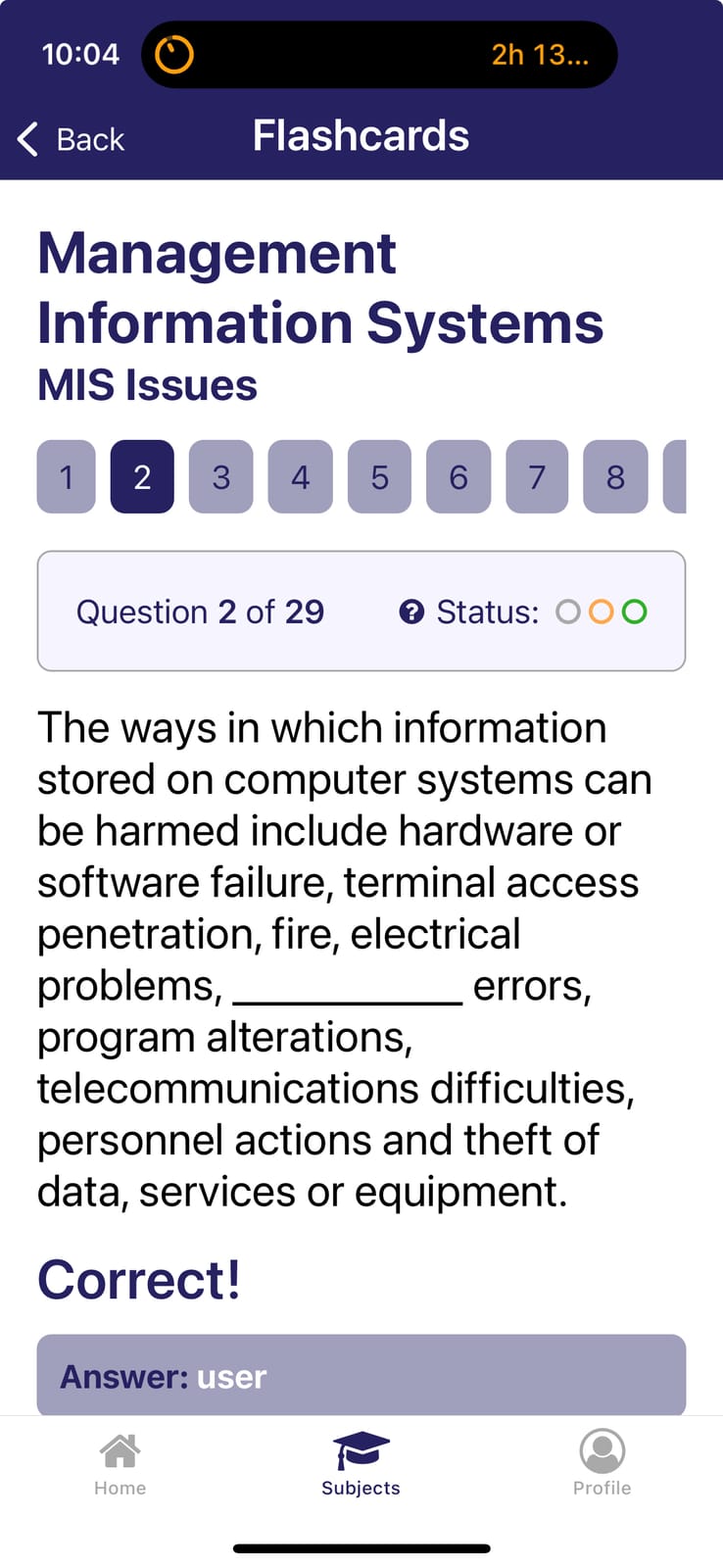
- Work through the InstantCert flashcards, paying attention to the ones you're getting wrong. Make sure you have all the vocabulary down.
- Download the official practice questions, which can give you a good sense of how questions are phrased.
- Before exam day, spend an hour reviewing project management basics: Agile vs. Waterfall, what SCRUM and KANBAN are, how a GANTT chart works, and what critical path means. A quick YouTube search for "project management basics" covers this section in well under an hour.
- Modern States has a free Information Systems course which can be a bit overkill, but note the sections you're having problems with and skip to those lessons.
- Know the MIS hierarchy. Transaction Processing Systems (TPS) handle day-to-day operational tasks. Management Information Systems (MIS) and Decision Support Systems (DSS) support managers. Executive Information Systems (EIS) support strategic decisions at the top. This framework appears across multiple questions during the exam.
What score do you need to pass?
A scaled score of 400 is the standard passing threshold at most schools, but some require 500. Credit typically applies toward a business administration or technology management requirement. Confirm your school's policy before you start studying.
Pass and the credit appears on your transcript with no grade. Fail and the attempt does NOT appear on your transcript at all.
Can you pass Management Information Systems DSST / DANTES* with just flashcards?
Yes, many of our students have passed with just our flashcards. The material has a lot of vocabulary to learn, which is easy using our flashcards. There is no programming, no complex math, no deep technical analysis required. 509 out of 528 students who submitted results passed, which is a 96% pass rate (last updated 2026).
Which colleges accept the Management Information Systems DSST / DANTES*?
Most regionally accredited colleges and universities accept DSST credit and award 3 semester hours for a passing score. MIS credit typically satisfies a business administration, information systems, or technology management requirement. Policies vary by school, and most institutions cap how many DSST and CLEP credits count toward a degree, so confirm your school's rules before you commit.
Management Information Systems DSST / DANTES* vs. taking the class
A semester of MIS at a community college typically costs a few hundred dollars. At a four-year university, a single course runs $1,000 to $3,000 or more. The DSST gets you the same 3 credit hours for $100, and it's free for active duty military.
| Exam fee | $100 (military free) |
| Typical tuition equivalent | $700–$3,000+ (one semester) |
| Credits earned | 3 semester hours (typical) |
| Time to prepare | 4–5 weeks self-study |
| GPA impact | None, pass/fail only |
| Failed attempt on transcript | No |
For most students, the exam is the clear winner especially if you just need the credit as an elective. If you're heading toward an IT management role and want classroom exposure to systems architecture or project management practices, the course is the way to go. For the credit alone, $100 and a few weeks of studying will get you there.
Happy testing!