
Free Principles of Microeconomics CLEP Practice Test

10 free questions from our 230 total.

92% of InstantCert students who reported passed

Question 1 of 10

Start Your 10 Free Questions

10 Free Questions that should take you about 5 minutes to complete.

Free Principles of Microeconomics Practice Test PDF

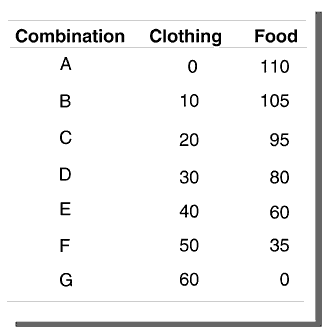
Prefer paper? Download the same 10 Principles of Microeconomics CLEP questions as a PDF you can print. The one question that depends on a table has its table printed with it. The answer key has an explanation for every question, and 2 of the 10 explanations come with their graph, so you can see where you went wrong and why. No signup and no email address. If the PDF helps, consider ordering the full study guide.

Download the PDF

8 pages, about 67 KB. Answer key included.

What the Principles of Microeconomics CLEP Covers

The Principles of Microeconomics CLEP is the equivalent of a one-semester introductory microeconomics course. Macroeconomics looks at a whole economy. This exam looks at one buyer and one firm at a time: why a price lands where it does, how a household decides what to buy, what it costs a firm to make one more unit, how much that firm produces and what it charges, how wages get set, and what government does when a market gets the answer wrong. It is NOT a vocabulary test. Graphs show up all over this exam. You get a supply and demand graph or a set of cost curves, and you have to say what happens when something changes. College Board splits the exam into 4 content areas, and one of them, Product Markets, is 55% to 70% of the test. That is big enough that the table below breaks it into its 4 parts, which is why you see 7 rows.

CategoryShare of examWhat is in it
Product Markets: Firm Behavior and Market Structure 23% to 33% Perfect competition, monopoly, monopolistic competition, oligopoly, and the price and output decision in each one
Product Markets: Supply and Demand 15% to 20% Supply and demand curves, what shifts them, elasticity, consumer and producer surplus
Basic Economic Concepts 10% to 16% Scarcity, opportunity cost, the production possibilities curve, comparative advantage, specialization and trade, marginal analysis
Product Markets: Production and Costs 10% to 15% Short-run and long-run costs, marginal cost, average costs
Market Failure and the Role of Government 8% to 14% Externalities (positive and negative), goods the market will not supply on its own, antitrust policy, income distribution and equity, effects of government intervention
Factor Markets 6% to 12% Labor demand and supply, the hiring decision, wage determination, income distribution, other factor markets
Product Markets: Theory of Consumer Choice 5% to 10% Utility maximization, budget constraints, substitution and income effects
QuestionsAbout 80 multiple choice
Time90 minutes
Passing score50 (some schools require 60)
College credits3 semester hours (typical)
Exam fee$97
Retake wait after a fail90 days

How do our free questions compare to the real exam?

By the count, close. Product Markets is 13 of our 20 free questions, which is 65%, and the real exam is 55% to 70%. The trouble is inside the categories, and you should know where the holes are before you read anything into your score. Here is the count for our 20 free questions (10 here, 10 more by email) against the real weights.

CategoryShare of real examOur 20 free questions
Product Markets: Firm Behavior and Market Structure23% to 33%6 of 20
Product Markets: Supply and Demand15% to 20%4 of 20
Basic Economic Concepts10% to 16%5 of 20
Product Markets: Production and Costs10% to 15%2 of 20
Market Failure and the Role of Government8% to 14%1 of 20
Factor Markets6% to 12%1 of 20
Product Markets: Theory of Consumer Choice5% to 10%1 of 20

TIP: Start with firm behavior and market structure, the largest piece of the test at 23% to 33%, or about 18 to 26 of the 80 questions. We give you 6 questions on it, and every one of them is about perfect competition or monopoly. There is NOTHING on oligopoly, monopolistic competition, or game theory. Factor Markets gets 1 of our 20 questions and it is 6% to 12% of the real exam, which is about 5 to 10 questions. Market Failure and the Role of Government also gets 1, against 8% to 14% (about 6 to 11 questions), and that one question only looks at externalities from the positive side. We have nothing on pollution and the other negative externalities, nothing on antitrust, and nothing on income distribution. Basic Economic Concepts runs the other way. It is 5 of our 20, which is 25%, against 10% to 16% of the real exam, and even with 5 questions there is not one on comparative advantage. One more gap, and it is the big one. None of our free questions makes you read a graph. One question on this page has a small table, and 5 of the 20 answer explanations include a picture, but the real exam hands you a supply and demand graph or a set of cost curves first and asks what changes. A good score here tells you the terms are in decent shape. It does not tell you whether you can read a cost-curve graph cold.

Where should I spend my time studying?

Five things, based on the College Board weights and what we tell every student on our study guide page:

  • Start with market structures. Firm behavior and market structure is the largest piece of the exam at 23% to 33%, which is about 18 to 26 of the 80 questions, and it is where most students struggle. There are four structures: perfect competition, monopolistic competition, oligopoly, and monopoly. Know what each one predicts about price, output, and profit, NOT just the names. Our free questions only cover two of the four.
  • Learn the firm's cost curves well enough to draw them from memory. Marginal cost, average total cost, and average variable cost show up all over this exam, usually with a price line or a demand curve drawn across them. For each graph, pick an output level and say out loud whether the firm is making a profit, taking a loss, or better off shutting down. If you cannot do that, you do not know the graph yet.
  • Work the supply and demand graph until it is automatic. Supply and demand is 15% to 20% of the exam, which is 12 to 16 questions. Shift one curve and say what happens to price and quantity. Then find consumer surplus and producer surplus on the same picture. The questions here ask what changes, and a definition will not get you there.
  • Do not skip the two small areas. Factor Markets and Market Failure and the Role of Government are 14% to 26% of the exam between them, or about 11 to 21 questions, and our free questions give you 2 on them in total. Know how a firm decides how many workers to hire, what a negative externality does to the market outcome, and how a tax or a subsidy is supposed to fix it.
  • Practice comparative advantage with numbers. It sits in Basic Economic Concepts and none of our free questions touch it. Take two countries and two goods, work out who gives up less to make each one, and do it a few times. It is manageable once you have done it by hand.

For the full topic breakdown and pass-rate history, see the Principles of Microeconomics CLEP study guide page.

Ready to study for the whole exam?

230 Principles of Microeconomics flashcards, 92% reported pass rate, $20/month.

Get the Principles of Microeconomics Study Guide

30-Day Money-Back Guarantee  |  Cancel Anytime

Recent User-Submitted Principles of Microeconomics Results

Below are ten of the most recent Principles of Microeconomics scores submitted by InstantCert students. These are unfiltered, real results. 50 passes at most schools.

Date of Exam Result Score

Live, unfiltered results posted by real InstantCert students. 578 submitted so far, 530 of them passing.

What Principles of Microeconomics Students Say About InstantCert

A review from an InstantCert member who tested out of 24 credit hours

“

I am a returning to school professional and in the 30 years gap between my previous attempt I had gained a LOT of experience. To streamline my academic journey I looked into a lot of options and saw that CLEP and DSST exams were going to be my most accessible way to convert that life knowledge into credits. Understanding the test format and HONING the knowledge for the tests was what I needed. InstaCert's format was GREAT!!! The flash cards were helpful, and provide the supporting material for WHY an answer is right or wrong. The mock-tests were a VERY close match to the real tests, so there were no surprises on test day. Using the service I was able to pass tests to knock 24 credit hours out for a fraction of the cost and time that enrolling in the courses would have required. Principles of Management, Microeconomics, and Principles of Marketing were a BREEZE!

Other Free Microeconomics CLEP Practice Tests

College Board is the only place you will see questions that have literally appeared on past exams. Their free Principles of Microeconomics sample questions page has a short set with an answer key. It is the best free look at a question with a graph in it, which is the one thing our fill-in-the-blank questions cannot show you.

Modern States runs a free Principles of Microeconomics course built for CLEP prep, with practice questions along the way. Finish it and Modern States gives you a voucher that pays the $97 exam fee. It is the right pick if you want a full class and not just a Microeconomics CLEP practice test. It is also where to go for the market structures our free questions skip, oligopoly and monopolistic competition, and for a feel of how the graph questions work. The course runs long, so pick the units you are weakest on before you commit to all of it.

Crash Course Microeconomics is not a practice test, but it is the best free video option if you need to SEE a curve shift before it makes sense. The episodes on supply and demand, elasticity, market structures, and externalities are short and line up with this exam. Skip around and watch the ones you need.

Taking more than one exam? We have a free 10-question practice test, built the same way as this one, for each of these:

Principles of Macroeconomics is the usual partner for this exam, and passing both clears two economics requirements at once. It has its own free Principles of Macroeconomics practice test, and Basic Economic Concepts is shared ground between the two.

If you complete the 10 questions above, you will be offered 10 more free questions from us.

What You Get With the Full Principles of Microeconomics Study Guide

Finished all the free questions and ready to study for real? Each question was made by a human. No AI involved.

  • 230 Principles of Microeconomics flashcards, each one with an explanation of why the answer is right. The questions on this page came directly from our study guide.
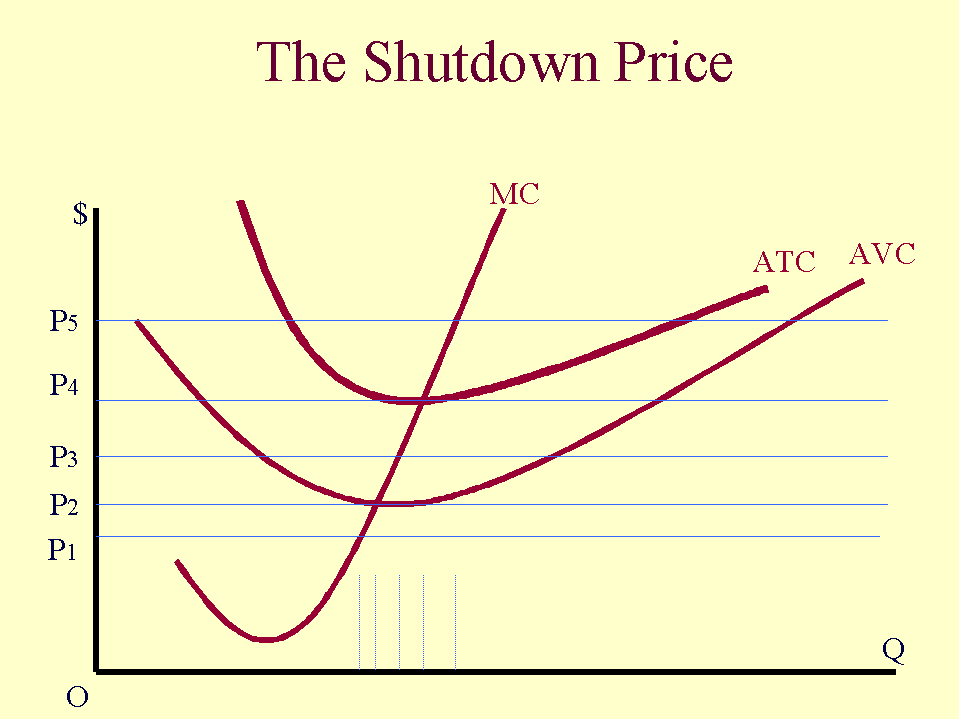
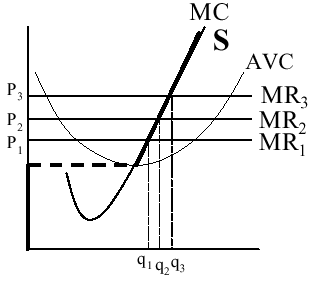
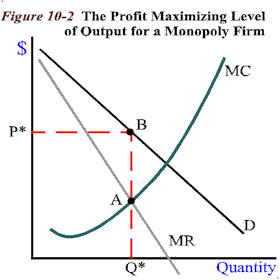
  • A graph in the explanation where the idea is a picture, such as the shutdown price or the gap between price and marginal revenue. 5 of the 20 free questions have a picture in the explanation.
  • Specific Exam Feedback forum on DegreeForum.net, where members post what was on their exam, how long they studied, and what they scored.
  • All 60+ other InstantCert study guides for CLEP, DSST, and TECEP exams, including Principles of Macroeconomics.
  • $20/month, cancel anytime.
  • 30-day money-back guarantee. If you are not happy in the first 30 days, just email, and I'll give you your money back.

One limit you should know about. Flashcards drill the terms and how they relate, and the real exam puts a graph in front of you and asks what happens when a curve shifts. A card can show you the graph. It cannot make you practice reading one you have never seen. Our own study guide page says students struggle with the graph questions on this exam, and for a student who is new to economics the cards alone can leave that gap open. If supply and demand graphs or the cost curves feel unfamiliar, add an hour or two of Crash Course Microeconomics or Modern States for the visual part. Both are free.

Get the Principles of Microeconomics Study Guide, $20/month

30-day money-back guarantee. Cancel anytime.

Principles of Microeconomics CLEP Practice Test FAQ

Are these real Principles of Microeconomics CLEP questions?

No. Real exam questions belong to College Board, and the exam changes its questions all the time, so anyone who claims their study guide has the exact questions is lying. These 10 come straight out of our 230-card Principles of Microeconomics study guide. Every one is a fill-in-the-blank sentence with four choices, and one of them comes with a small table you have to read. The real exam is multiple choice too, but many of its questions put a graph in front of you and ask what happens when something changes. Ours check whether you know the term and the relationship. They do not check whether you can read the graph.

Do these practice questions cover the whole Principles of Microeconomics CLEP exam?

No, and it is better you hear that from us. Our 20 free questions (10 on this page, 10 more by email) touch all 4 of the exam's content areas, but not evenly. The 6 questions on firm behavior and market structure are all about perfect competition or monopoly, so there is nothing on oligopoly, monopolistic competition, or game theory, and that topic is 23% to 33% of the real exam. Factor Markets and Market Failure and the Role of Government get 1 question each against real shares of 6% to 12% and 8% to 14%. Basic Economic Concepts gets 5 of the 20, more than its 10% to 16% share, and still has nothing on comparative advantage. None of the 20 asks you to read a supply and demand graph or a cost-curve graph. The comparison table above has the full count. Use your score as a check on the terms, NOT as a forecast for the whole test.

How many questions is the real exam?

About 80 multiple-choice questions in 90 minutes, which works out to about 67 seconds per question.

What score passes?

50, at most schools. Scores run on a scale of 20 to 80, and some schools require a 60, so check your school's CLEP policy before you register. Passing earns 3 semester hours at most schools.

How hard is the Principles of Microeconomics CLEP exam?

Many people find it a bit difficult, and the pass rates back that up. Look at who is passing before you relax. The civilian pass rate is 72%, which means more than 1 in 4 people who pay to sit this exam do not pass. The military pass rate is 39%. Military test takers sit the exam for free, so more of them walk in with little or no studying, and about 6 in 10 of them do not pass. Among InstantCert students who reported a score, 92% passed. Two things make it hard. The first is market structures. You have to know what perfect competition, monopolistic competition, oligopoly, and monopoly each predict about price, output, and profit, and knowing the four names is not enough. The second is graphs, which show up all over the exam.

How do I get the next 10 questions?

Finish the 10 above, enter your email on the score screen and you get 10 more free practice questions.

Is the study guide enough on its own?

For many students, yes. 92% of the InstantCert students who reported a score passed, and microeconomics is built out of concepts and the links between them, which is what flashcards drill. With that being said, two cautions. Our own study guide page says students struggle with the graph questions, and a flashcard cannot make you practice reading a graph you have never seen. And the people who pass tend to use more than the cards. One Google reviewer who passed Marketing, Microeconomics, and Financial Accounting with us gave the credit to two things: "The flashcards are a great study tool as well as the discussion forums to see everyone's feedback from taking the tests." If you have some economics background, plan on 1 to 3 weeks with the flashcards. Starting from scratch, plan on 4 to 6 weeks, and spend an hour or two of it on Crash Course Microeconomics or Modern States so you have seen the graphs move. If you keep getting the same cards wrong, that is the sign to go find a second source.

Is there a free Principles of Microeconomics CLEP practice test PDF?

Yes. You can download it above with no signup and no email address. The answer key includes the graphs.

How many practice questions should I do before the exam?

There is no magic number. The real exam is about 80 questions, and no free practice set comes close to that length or covers every market structure. Ours does not, as the answers above explain. Do our 20, then College Board's sample questions for the graph style, then work through the full 230-card set. Before you book a test date, put a clock on yourself at least once. About 67 seconds a question is faster than it sounds when the question comes with a graph.

Is the College Board Principles of Microeconomics CLEP practice test worth it?

Yes. It is the only place to see retired real questions, and the best free example of how the exam builds a question around a graph. The free sample set is short, though, so do not count on it alone.

How long should I study for the Principles of Microeconomics CLEP?

1 to 3 weeks if you already have some economics background. 4 to 6 weeks of self-study if you are starting from scratch. In both cases, mark the flashcards you keep getting wrong and go back to them, give extra time to market structures and the cost curves, and use a free video source for any graph you cannot explain out loud.

Which colleges accept the Principles of Microeconomics CLEP?

Most accredited U.S. colleges and universities accept it for 3 semester hours, usually toward a social science or economics requirement. Most accept a 50, but some require a 60. College Board has a credit policy search tool, but it is not always up to date, so confirm with your college before you pay the $97.

Want direct access to people who have passed? The Specific Exam Feedback thread on DegreeForum.net is where they post what they studied and what they scored. Join today and ask away. Happy testing!

Ready to study for the whole exam?

230 Principles of Microeconomics flashcards, 92% reported pass rate, $20/month.

Get the Principles of Microeconomics Study Guide

30-Day Money-Back Guarantee  |  Cancel Anytime